








|
News Source: topspeed.com
|
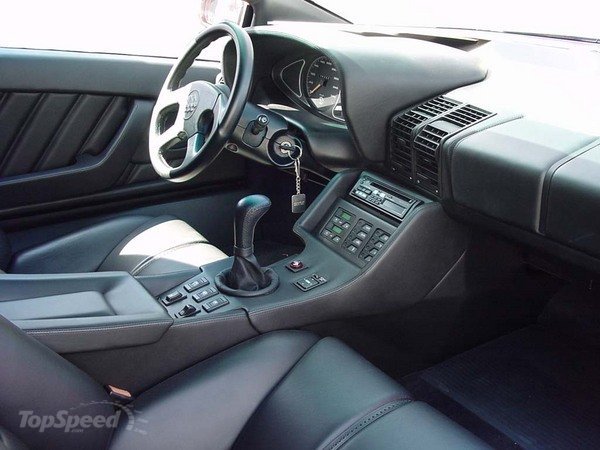
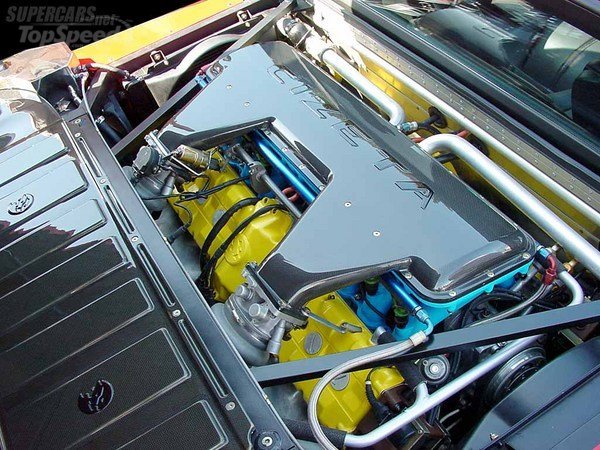
The 1980s was a great era for exotic cars. Ferrari had the bold Testarossa and the turbocharged F40, Porsche launched the innovative 959, and Lamborghini was still improving the Countach while also working on the Diablo, which arrived in 1990. Bugatti, a name that had disappeared in the early 1960s, returned to the market after Italian entrepreneur Romano Arioli acquired the brand in 1987. Claudio Zampolli was another Italian that that entered the supercar business in the 1980s. An ex-Ferrari dealer, Zampolli teamed up with Giorgio Moroder, a music producer often credited with pioneering synth disco and electronic music, and established Cizeta Automobili. The Cizeta-Moroder V16T was the company’s only product and, despite its short-lived presence on the market and limited production run, it created quite a stir due to its controversial design and massive V-16 engine. Set up in the late 1980s, Cizeta launched the V16T in 1991. By the time the supercar hit the market, Giorgio Moroder had already left the company, keeping the original prototype and the only V16T to wear both the Cizeta and Moroder names. The controversial design and expensive price tag of the V16T forced Cizeta into bankruptcy, and production of its only supercar ended in 1995. Shortly after Cizeta went under in Italy, Zampolli moved to the U.S. and established Cizeta Automobili U.S.A. in California. He continued building the V16T on demand while also servicing exotic cars. It’s been nearly three decades since the V16T prototype made it’s public debut and we decided to have a closer look at this wild-looking supercar. Keep reading to find out what makes it special. The 1980s brought many wild-looking supercars, but none was as intriguing as the V16T. The design of the Cizeta-Moroder is actually the most interesting part of the story. The car was penned by Marcello Gandini, who designed the Lamborghini Diablo prior to joining Cizeta. The similarities between the two aren’t surprising, as Gandini used the original styling of the Diablo to create the V16T. Development of the Diablo began in 1985, when the design of the car was contracted to Gandini, who also penned its predecessors, the Countach and the Miura. Gandini submitted a more radical initial design that featured a longer rear section and his signature notched rear-wheel arches, but Chrysler, who had bought Lamborghini in 1987, took the concept to its Detroit-based design team, which altered it heavily. Disappointed with the softer shape of the production Diablo, Gandini took his original sketches to Cizeta. The Cizeta was a more radical interpretation of the Diablo, featuring significantly wider fenders with horizontal strakes, a canopy-like roof and glasshouse, and a more aggressive front section. As a result, the car was considered what the Diablo would have looked like had Chrysler not intervened. However, Gandini’s design was slightly altered by Zampolli as well, especially the rear section. All told, the Cizeta was a more radical interpretation of the Diablo, featuring significantly wider fenders with horizontal strakes (similar to those seen on the Testarossa), a canopy-like roof and glasshouse, and a more aggressive front section. The headlamps were among its most exotic features. Pop-up headlights were quite popular in the 1980s and many sports car manufacturers used them until the 1990s, but Citeza took things further and equipped the V16T with not two, but four of them. Two were positioned just above the nose, where most vehicles had them back in the day, while the other two were mounted behind the first pair, just a few inches below the windshield. Around back, Cizeta went with rectangular taillights that extended toward rear haunches and a spoiler-like wing atop the engine hood. These solutions were opposed to what most supercar makers used in the 1980s. For instance, the Lamborghini Diablo and the Ferrari F40 had larger, fixed wings and round taillights. The Cizeta was definitely wild to look at, but at the same its design was of the "love it or hate it" variety. On the other hand, the fact that the Diablo is a lot more popular is due to the fact that Cizeta-Moroder was a new company and the V16T didn’t benefit from the marketing campaign that backed the Lambo. Most supercars of the era had simple interiors with far fewer gadgets than modern vehicles. The V16T was no exception to that rule, but it looked quite spartan when compared to a 1980s Lamborghini or Ferrari . The reason for that was that Zampolli was a big fan of race cars and classic Ferraris. More importantly, he did not believe in gauges and fancy indicators. In his own words: "People don’t look at gauges. So I decided to make things compact and simple with everything in front of you like a racing car." One quick glance at the interior is enough to notice the simplicity of the V16T's cockpit. One quick glance at the interior is enough to notice the simplicity of the V16T’s cockpit. The instrument cluster consisted of only two gauges, a tach and a speedometer. The dashboard was as basic as possible, while the center console had a few buttons just above the center console. The latter contained a few more switches and the sporty, fat gear shifter. But, despite its simplicity, the cockpit was plush and comfortable for a supercar. The seats and the door panels were wrapped in leather, while the floor was covered in soft mats. The V16T was offered with many upholstery colors, including red, bright-blue, cream, and black. Also, customers had the options to go with two-tone interiors that matched those offered by Ferrari and Lamborghini in the late 1980s. |

|
.jpg)

| Copyright © 2026 • www.showcar.com.au • Showcar Pty. Ltd. • Contact info@showcar.com.au | sydney web design & development by Webski |