








|
News Source: topspeed.com
|
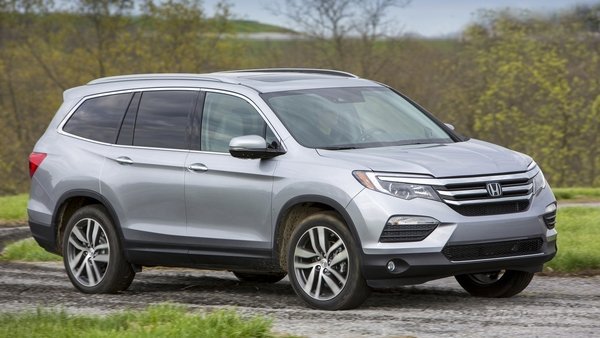
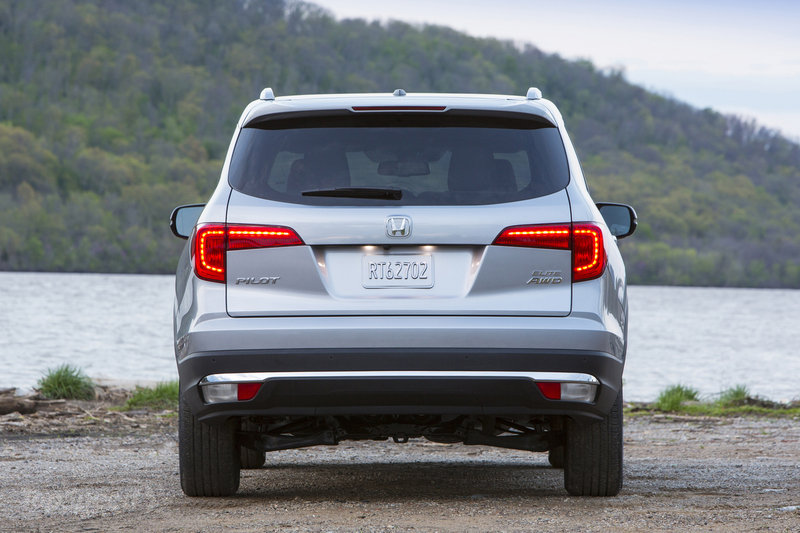
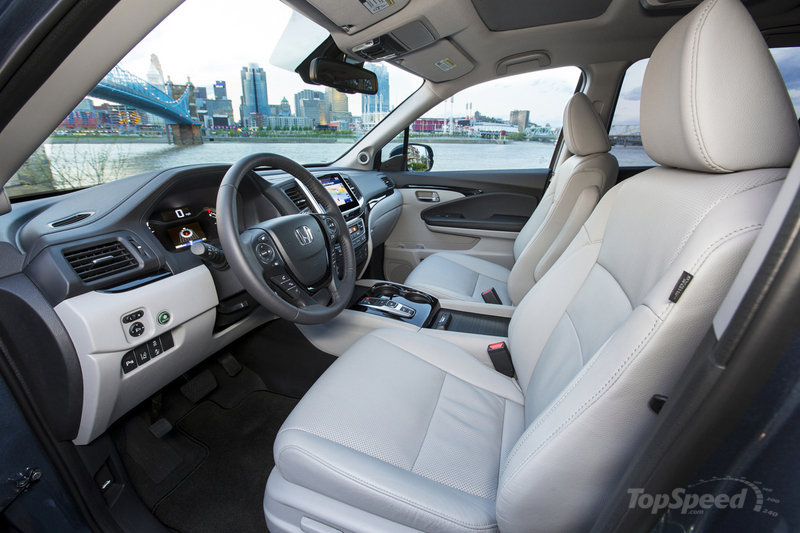
The "SUV or minivan" argument is a perennial one when it comes to vehicles used for moving mass quantities in the suburbs. Minivans would appear to hold an advantage when it comes to passenger and cargo capacity, as well as being easier to drive, but the new-for-2016 third-generation Honda Pilot could singlehandedly tip that balance in favor of the sport-utes. The Pilot has matured into a high-tech full-size crossover vehicle, with three-row seating and space for up to eight passengers. In fact, Honda has matured the vehicle well past its throwback boxy styling and turned it into a thoroughly modern family hauler that retains the SUV-like towing capacity and bad-road capable suspension that have enabled it to hold its own against heavyweights like the Ford Explorer and Chevrolet Tahoe since 2002. If there’s any downside to the all-new Pilot, it’s that it’s almost too nice to get it dirty. But does the king of the suburban crossovers really need to tackle muddy hills anyway? In photos the Pilot could be mistaken for a CR-V, in fact; the character creases down the body sides, wheel design and taillight design are all similar. Say goodbye to the box. The formerly brick-shaped Pilot now sports a silhouette reminiscent of the compact CR-V. A stronger family resemblance suits the Pilot well, and it’s a handsome blend of Honda ’s vehicles. The bold three-bar grille and LED-accented headlights are similar to the Accord, while the angular wagon-back silhouette is instantly reminiscent of the CR-V. In photos the Pilot could be mistaken for a CR-V, in fact; the character creases down the body sides, wheel design and taillight design are all similar. To highlight the high-tech aspect of the vehicle, LED taillights and available LED headlights are offered. In person, of course, the Pilot is big—three and a half inches longer than its predecessor, to be specific. Though the sheet metal masks its size well, it’s obvious from street level that this is a full-size vehicle. In spite of this, curb weight is down by 300 pounds over the previous Pilot. The high-tech interior could serve as a reminder that Honda spawned Acura. A mixture of durable materials and shiny piano-black trim is used. Most noticeable is the lack of a conventional shifter; the transmission is controlled by push buttons on the console. Honda uses the extra space to provide space to store cell phones and a large roll-top center cubby. The console itself is massive, big enough to hold a full-size iPad, and the cover serves as a second tray for small items. On the center stack, a smooth eight-inch capacitive touch-screen controls ancillary functions via an Android-style interface. There’s an integrated navigation system with a fancier, better-resolution display as well. Honda has improved the Display Audio system to make phone connectivity easier, but the full touchscreen can still be a little bit distracting. Third-row seating is accessed by a one-touch slider on the second-row seats on uplevel models. Second-row seats can be heated as well. The third-row seats are reasonably spacious, and a large group will be quite comfortable on a long-ish road trips. Honda says there’s space for an 82-quart cooler behind the rear seats with all three rows in place, thanks to the additional body length. The Pilot knows that passengers have to be kept occupied, as well. Up to five USB outlets are available, as well as a 115-volt household outlet for video game consoles and the like. A Blu-Ray entertainment system is also available for backseat passengers. The Pilot is powered by a 3.5 liter V6. As a member of Honda’s EarthDreams powertrain series, this SOHC engine features direct fuel injection and Variable Cylinder Management for freeway fuel savings. That doesn’t stop it from producing 280 horsepower, of course. The engine operates with an eye toward frugality rather than raw displays of power, so throttle response and kickdown are gentle. A six-speed automatic transmission is standard. Honda also offers a new nine-speed autobox whose additional cogs provide greater engine flexibility in a wide range of driving environments. The nods toward efficiency pay off with good economy for this vehicle’s size: 20/27mpg in two-wheel drive Pilots, and 19/26 with all-wheel drive. The engine operates with an eye toward frugality rather than raw displays of power, so throttle response and kickdown are gentle. When things get slippery, the all-wheel drive Pilot uses a torque-vectoring system to keep power and the vehicle balanced. Engine power is constantly balanced front to rear and left to right on the rear axle. Honda’s Intelligent Traction Management is also included; this system, like similar systems used by Jeep and Land Rover, enables the Pilot to adapt to certain road surfaces at the push of a button, with operating modes set up for sand, snow and mud. It’s a sophisticated system, and the Pilot with all-wheel drive feels supremely confident on the road, and definitely falls into the "drives small" category. Honda’s electronic power steering and handling that’s responsive without being twitchy make the Pilot easy to drive even for drivers who are uncertain about its size. It should come as no surprise that the Pilot is a top safety pick. Honda has long advocated occupant safety in its cars and SUVs, and the Pilot gets five-star overall ratings from NHTSA and IIHS. Multiple-threshold front airbags, vented side bags and side-curtain airbags for all three rows are standard. Available equipment includes the LaneWatch lane departure assist, a blind spot warning system with cross-traffic alert, and a multi-angle backup camera. A collision-mitigating automatic braking system with forward collision warning is something you’ve probably seen before, but Honda’s road departure mitigation is all new. |

|

| Copyright © 2026 • www.showcar.com.au • Showcar Pty. Ltd. • Contact info@showcar.com.au | sydney web design & development by Webski |