








|
News Source: topspeed.com
|
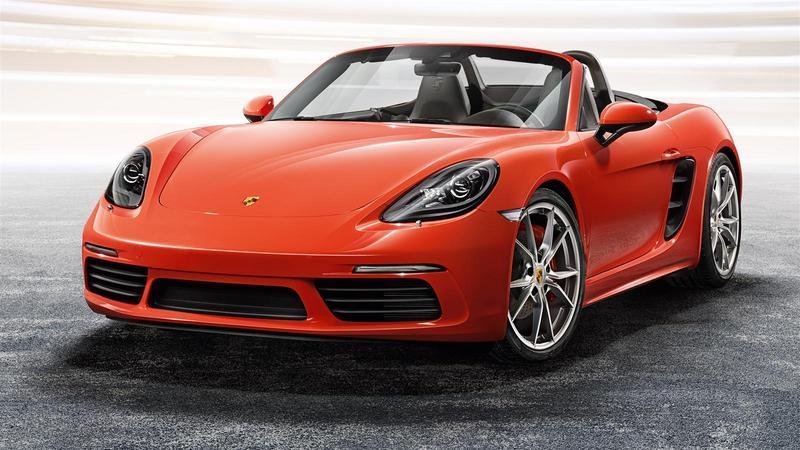
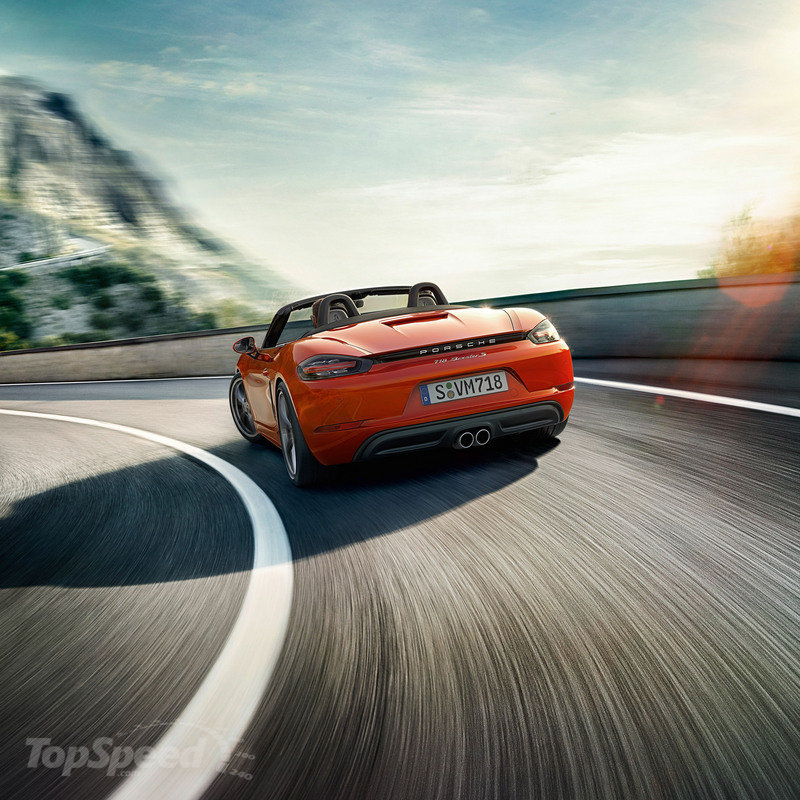
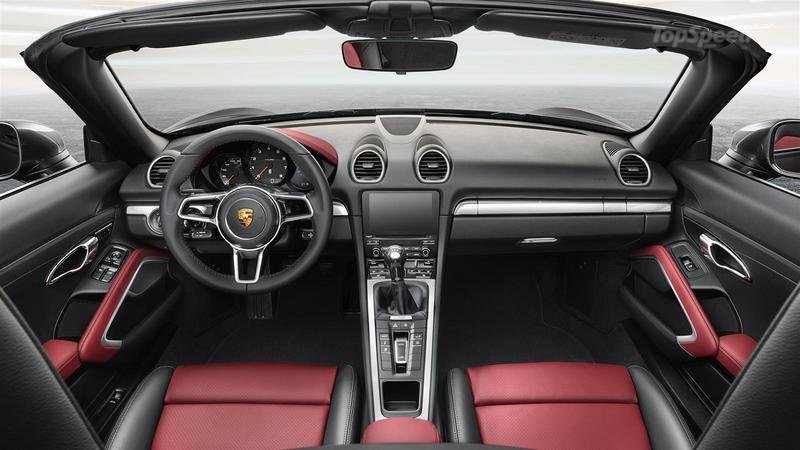
The 1997-2004 Porsche Boxster was introduced in 1996 as an entry-level, mid-engined sports car. It was Porsche’ s first road-going roadster since the 550 Spyder. Although it was received with mild criticism and was seen as a departure from Porsche tradition, the Boxster quickly grew on enthusiasts to become the company’s biggest volume seller until the Cayenne SUV was launched in 2003. Twenty years have passed since its debut and the roadster received the most important facelift of its life. Much like the new 911 Carrera, the Boxster has ditched its naturally aspirated engine in favor of turbocharged units, as part of Porsche’s new strategy to reduce emissions and improve efficiency. More importantly, the said turbo mills use a different, flat-four configuration instead of the traditional flat-six, making the Boxster the first Porsche sports car to use a four-cylinder in several decades. The facelift also brings a name change to the lineup, with the Boxster to be sold as the 718 Boxster from now on. Although new to the Boxster, the "718" denomination isn’t new to Porsche. The Germans used the same nameplate for a lightweight sports car built between 1957 and 1962. The fact that Porsche decided to revive the name with the Boxster is no coincidence, as the 718 also used four-cylinder engines. On top of that, the original 718 was quite a successful race car, winning the Targa Florio, European Hill Climb championship, and the 24 Hours of Le Mans (class win), so it’s natural for the automaker to want to exploit its motorsport heritage. The 718 name will also be used for the Cayman once the coupe gets its update, but until that happens, let’s have a closer look at the revamped Boxster in the review below. Updated 02/26/2016: Porsche dropped a new video in which it shows the new 718 Boxster in action at the company’s Experience Center in Silverstone. Hit "play" to watch it.Porsche says that every body panel of the Boxster, except for the luggage compartment lids, the windshield, and the convertible top have been redesigned, hinting that the 718 is more than just a facelift. However, the resculpted body panels are still very similar to the previous model, keeping the 718 recognizable as a Boxster. Major modifications include a slightly wider front end with a new bumper section. Major modifications include a slightly wider front end with a new bumper section. The side intakes are now wider and slightly thinner. As a result, the LED daytime running lights, also thinner than the previous model, are no longer integrated into the vents, but mounted as separate pieces. The center grille underneath the license plate has also been reshaped. Another important change is the addition of Porsche’s new bi-xenon headlamps and the optional units with four-point DRLs. The latter are available for the Boxster for the very first time and give the roadster a striking appearance. From a side view, the 718 doesn’t seem to be that different compared to the Boxster, but some new features catch the eye upon closer inspection. For instance, the wings that define the side intakes are more pronounced and almost run into the front fenders, while the side skirts are beefier. The intakes are also slightly larger, while the doors no longer have handle recess covers. The 718 also gained revised side mirrors and new 19-inch standard wheels. Optionally, customers can order 20-inch rollers. More changes are noticeable around back, where Porsche redesigned both the taillights and the decklid. More changes are noticeable around back, where Porsche redesigned both the taillights and the decklid. The new taillights stand out thanks to the brand’s 3D LED technology and four-point brake lights, but the real highlight is the black strip with integrated "Porsche" lettering between them. The "718 Boxster" badge has been moved from the engine lid between the new strip and the bumper. The apron is also new and features a revised diffuser. The mid-mounted exhaust configuration remained unchanged. The base model has a rectangular outlet, while the Boxster S sports a pair of round pipes. Porsche has yet to release details about exterior colors and other options, but the official photos suggest the roadster will be available in the stunning Lava Orange hue seen on the 911 GT3 RS. Inside, the 718 Boxster sports a new dashboard with revised A/C vents and an updated instrument cluster. Inside, the 718 Boxster sports a new dashboard with revised A/C vents and an updated instrument cluster. Although it remained about the same as far as size and shape go, the steering wheel received new spokes and a new center section. It now looks more upscale and bears a closer resemblance to the one seen in the 911. Everything else was carried over pretty much unchanged, but Porsche made some updates in the technology department. The standard Porsche Communication Management system features cell phone preparation, audio interfaces, and a 110-watt Sound Package Plus, and it can be enhanced with a navigation module with voice control. Porsche also offers the Connect Plus module for access to a wide array of online services. This is where Porsche made radical changes to the Boxster by dropping the previous flat-six engine and replacing them with brand-new, flat-four units. The new powerplants were developed with improved performance and efficiency in mind and both the Boxster and Boxster S benefit from significant enhancements in those areas. The base 718 Boxster received a turbocharged, 2.0-liter producing 300 horsepower and 280 pound-feet of torque The base 718 Boxster received a turbocharged, 2.0-liter producing 300 horsepower and 280 pound-feet of torque, which is a 35-horsepower and a whopping 74-pound-feet improvement over the previous model. The impressive torque is the result of turbocharging, which is also expected to make the 718 about 14 percent more efficient. The extra oomph enables the base model to hit 60 mph from a standing start in 4.9 seconds with the manual and 4.7 ticks with the PDK. Adding the Sport Chrono Package takes the benchmark down to 4.5 seconds, making it 0.7-seconds quicker than its predecessor. Top speed has also increased to 170 mph, eight mph more than last year’s Boxster. Charging from 0 to 60 mph takes four seconds, a half-second quicker than before, while top speed is rated at 177 mph, five mph more than the pre-facelift Boxster S. Moving over to the Boxster S, its 3.4-liter flat-six has been replaced with a turbocharged, 2.5-liter, flat-four. The new four-banger sends 350 horsepower and 309 pound-feet to the wheels, which accounts for a 35-horsepower and 43-pound-feet improvement over the previous model. Charging from 0 to 60 mph takes 4.4 seconds with the manual and 4.2 ticks with the PDK. When equipped with the Sport Chrono Package, the Boxster S hits 60 mph in four seconds flat, a half-second quicker than before. Top speed is rated at 177 mph, five mph more than the pre-facelift Boxster S. Just like the previous model, the new Boxster comes standard with a six-speed manual transmission, while the PDK gearbox is available as an option. To further improve performance, customers will be able to equip both the Boxster and Boxster S with the optional Sport Chrono Package. Just like in the 911, the bundle now includes the Individual program in addition to the three settings, which are Normal, Sport and Sport Plus. In models equipped with PDK, the Sport Response Button has been added. When activated, it sharpens the responsiveness of the engine and the transmission to enhance acceleration. |

|

| Copyright © 2026 • www.showcar.com.au • Showcar Pty. Ltd. • Contact info@showcar.com.au | sydney web design & development by Webski |