








|
News Source: topspeed.com
|
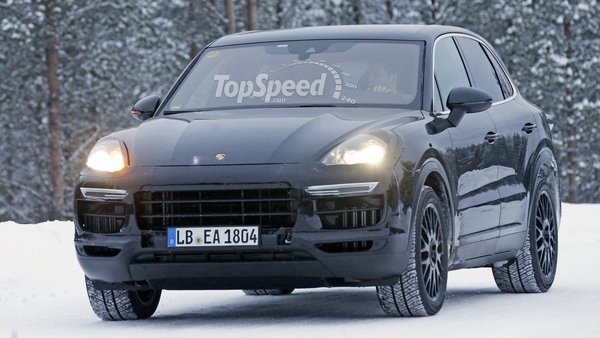
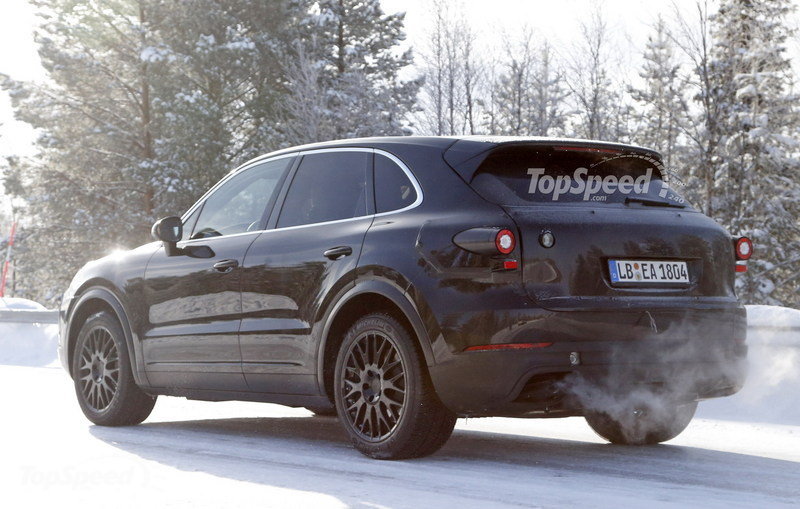
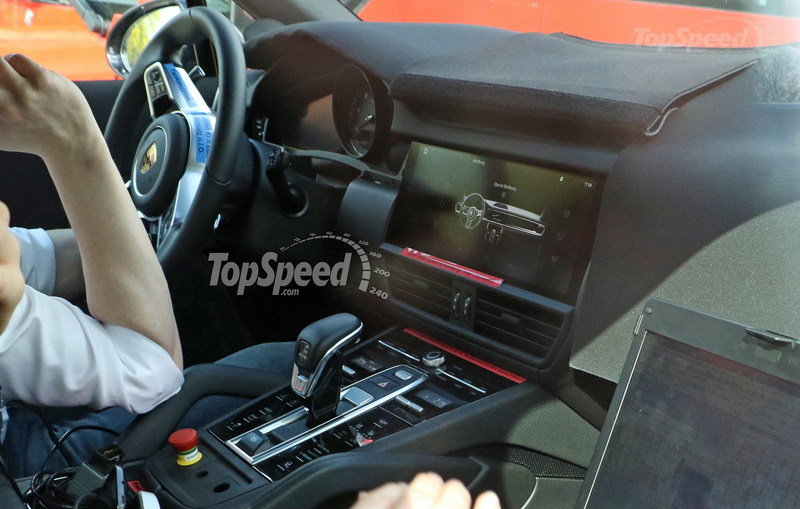
Porsche ushered in the second-generation Cayenne for the 2010 model year, and by 2013 the Cayenne lineup had expanded to include hybrid and diesel- powered models. By the time we turned the calendar to 2015, it was time for the Cayenne to take on a facelift, bringing lots of visual changes to the exterior, updated powertrains, and several interior upgrades. Despite that extensive facelift taking place, Porsche has been busy developing the next-generation Cayenne, and we just received spy shots of it doing some cold weather testing with very little camo. The most important thing about the next generation is that the Cayenne will be underpinned by the new MLB SUV platform that has already been used on the Audi Q7 and the Bentley Bentayga, which means we should see a significant drop in weight over previous models. Outside of the new platform, the Cayenne shouldn’t change too much. We expect so see more of an evolution of the current design language as opposed to a complete redesign, and we should see some updated technology on the inside. We expect the new Cayenne to debut next year as a 2018 model, but with the new model already testing without Camo, we may see it sooner than later. Until we get more details about the next-gen Cayenne, let’s take a closer look at these spy shots. Update 5/20/2016: The next-generation Cayenne has been caught testing in the wild again. This time, it sheds the fake taillights, and we get a look at the interior. Check out the review below for all the details. Looking at the front of the test mule, we can see a pretty generous helping of black tape magic. The outer edges of the headlights are taped off, as it the upper portion of the fascia. This tells us that the design of the headlights has been refined and will take on a slightly different shape where they meet the fascia. The grille also looks like it has been revised a bit and will likely be just a little bit bigger. The vent on each side of the grille looks different in the spy shots, but that is because the insert that surrounds the top and outer edge of each vent is missing at this time. The grille also looks like it has been revised a bit and will likely be just a little bit bigger Expect the vents on the finished product to look nearly identical to those on the outgoing model. It looks like the fog lights might fit into the fascia between the corner vents and the headlights. There is now two smaller, horizontal vents where the fog lights once were. The hood appears to be the same as on the outgoing model, but like I said before, this is an evolution of the current design, not a redesign. Looking at the sides, there isn’t a whole lot to talk about. The same mild body line runs across the doors below the waistline, but down below the body lines look to me a little more aggressive. The side view mirrors also look to have gotten just a tad bit longer that the ones on the current model. Like the front, it looks like the rear end is also evolving a bit, and with the newest round of spy shots, we get a look at the real taillights for the next generation. There is still foil around the outside edges of the taillights to make them look the same as the current model, but rest assured, when that foil is removed they will probably have a slightly different shape. Furthermore, we can see that the lens layout has changed and now features a more complex layout within. Based on the phony reflector we see just below the taillight, it’s safe to assume that the rear taillights may have a smoother bottom edge as opposed to the jagged bottom edge on the current model. It also looks like the taillights may end up with a more rounded end out the sides of the vehicle. If anything it looks like the taillights may grow a little bit with this generation. InteriorWe’ve finally gotten our hands on shots of the interior, and boy can we see some differences. The steering wheel looks to be about the same, but the instrument cluster ahead of it looks to have changed dramatically. You’ll notice that the analog tachometer still protrudes from the center of the cluster, but it looks like the rest of the cluster will be digital in this generation, giving the interior more character from the driver’s perspective. The dash has also gone through some significant changes. We can’t get a good look at the corner vents, but the vertical vents on each side of the infotainment screen are gone. Instead, this model has a much larger infotainment display with the center vents positioned below it in a horizontal layout. It remains to be seen whether or not the Cayenne will still have an analog clock recessed into the center of the dash. Since the top of the dash is covered, we can’t make out what’s going on up top, but there doesn’t seem to be any recess above the display screen for the analog clock as there was in the current model. The panel on the center console has also changed, now featuring a more refined layout of buttons. It looks like the controls ahead of the shifter now have a rotary knob, and the panel of buttons that were behind the shifter seem to be non-existent on this test mule. The gear shifter has changed too, which could indicate a different transmission option in the new model. The “oh crap” handles on each side of the console are still in place, but they now sit a little higher and are more square than before. The center panel has also lost the recess on the inside of each handle now that they seem to sit a little higher. This is just a quick glimpse at the inside, and there is surely more details to come, but for now we have a pretty decent idea of what is going on inside. It looks like Porsche will make the cabin just a little more upscale, and that new display screen in the center stack is nearly double the size of that in the outgoing model. DrivetrainConsidering the Cayenne took on an update to its drivetrain recently, expect the next generation to use the same powertrain lineup. That means a range of gasoline engines, a hybrid drivetrain, and at least one diesel drivetrain. The current base model Cayenne is powered by a 3.6-liter V-6 that produces 300 horsepower and 295 pound-feet of torque. The sprint to 60 mph takes 7.3 seconds with top speed maxing out at 142 mph. The sprint to 60 mph takes 7.3 seconds with top speed maxing out at 142 mph. Next up is the Cayenne S that also has a 3.6-liter, but it produces 420 horsepower. In S form, the 60 mph sprint takes 5.2 seconds, and top speed is 161 mph. In the Cayenne GTS, that 3.6-liter produces 440 horsepower and 442 pound-feet of torque. Sixty mph comes in 4.9 seconds, and top speed sits at 163 mph. The Cayenne Turbo is powered by a 4.8-liter V-8 that pumps out 520 horsepower. The turbo can hit 60 mph in just 4.2 seconds with a top speed of 173 mph. Next up is the Cayenne S E-Hybrid that is powered by a 3.0-liter, supercharged V-6 and an electric motor that produces a total of 416 horsepower. Finally, we get to the Cayenne Diesel, which is powered by a 3.0-liter that produces 240 horsepower. A 60 mph sprint in the diesel takes 7.2 seconds with top speed sitting at just 135 mph. I don’t expect to see any upgrades on the power front, but a minor increase in power throughout the lineup isn’t out of the question. If anything, the lighter platform will bring slightly better performance specs across the lineup as well as better handling. PricesAt this point, there is no telling what kind of pricing we’ll see on the next-gen Cayenne, but considering it will ride on a new platform prices may increase incrementally across the line. Currently, the Cayenne starts out at $58,300 for the base model and goes up to $157,300 of the range-topping Turbo S. The hybrid currently goes go $77,200. If anything, I would expect prices to increase by no more than a couple thousand, so expect the next generation to start out at around $60,000 and top out around $160,000. |

|

| Copyright © 2026 • www.showcar.com.au • Showcar Pty. Ltd. • Contact info@showcar.com.au | sydney web design & development by Webski |